Caica Parrots or Hooded Parrots
Beauty of Birds Editorial Team
September 16, 2021 · Updated September 3, 2022 · 2 min read
The author of this article is separate from the Beak School training courses and their instructors.
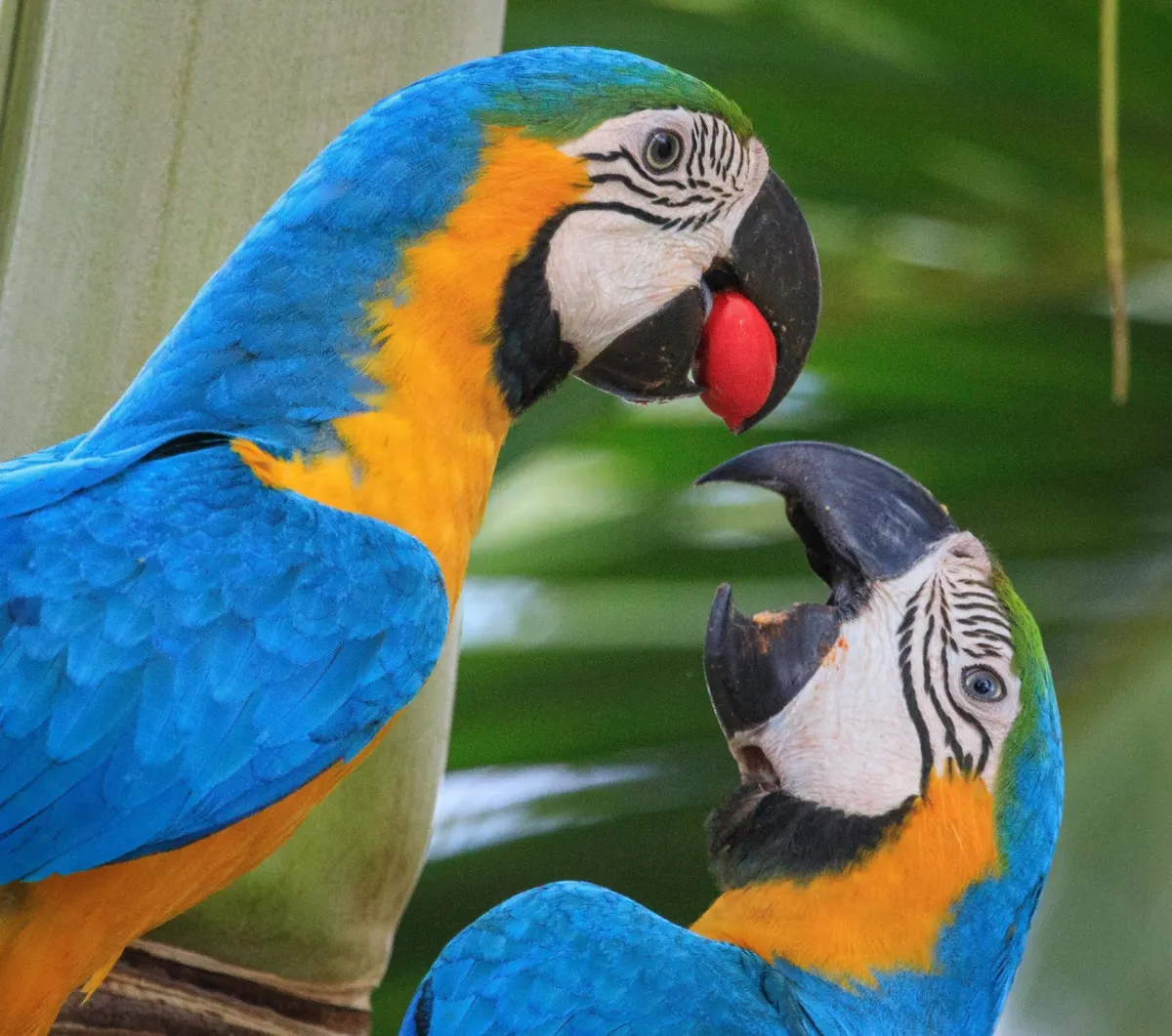
The Caica Parrots or Hooded Parrots (Pionopsitta caica) are found in the subtropical or tropical moist lowland forest areas of north-eastern Brazil, French Guiana, Bolivar, Guyana, Suriname, and eastern Venezuela.
Splendour Parrots
The Caica Parrots or Hooded Parrots (Pionopsitta caica) are found in the subtropical or tropical moist lowland forest areas of north-eastern Brazil, French Guiana, Bolivar, Guyana, Suriname, and eastern Venezuela.
Description:
Caica Parrots average 9.2 inches (23 cm) in length (including tail). The plumage is generally green, with the exception of the brownish-black head, a broad orange brown ring around their neck, and blue and black on their wings.
The lower breast, abdomen and under tail-coverts are yellowish-green. Each feather edged brownish. The throat and the upper breast are dull olive-brown. The bend of the wing has a pale blue tinge. The primary wing feathers are dark blue with green edging to the outer webs. The flight feathers are black with green outer webs. The underside of the flight-feathers are bluish-green. The middle tail-feathers have blue tips. The outer tail-feathers have yellow marking to the inner webs. The bill is a whitish-horn color. The irides (= plural of iris) of the adults are orange-red; and the cere and feet are grey.
Immature birds have a greenish head. The cheeks and ear-coverts have an olive-green tinge. The band to the nape (back of the neck) is dull yellowish and without any brown edging. The throat and breast are green with an olive-yellow tinge. Their irides (= plural of iris) are dark.
Personality:
The Splendour Parrots are very quiet in an aviary, with an endearingly friendly and gentle personality. They are highly social and should be kept with a mate or in a group environment. In the wild, Superb Parrots are almost always found in flocks. They acclimatize fairly easily to a new environment and are very hardy … Talking Abilities (compared to other species).
Diet:
Superb Parrots eat grain, seeds, nuts, fresh fruits and vegetables. In the wild, their diet consists mainly of eucalypt flowers, fruits, nectar and pollen.
Taxonomy / Alternate Names:
Genus: Scientific: Pionopsitta … English: Splendour Parrots … Dutch: Prachtpapegaaien … German Zierpapageien … French: Caica … Species: Scientific: Pionopsitta caica aka Gyopsitta caica … English: Caica Parrot … Dutch: Caica Papegaai … German: Kappenpapagei … French: Perroquet Caica
Czech: amazónek kaika, Papoušek kaika
Danish: Sorthovedet Pragtpapegøje
German: Kappenpapagei, Kappen-Papagei
English: Caica Parrot, Hooded Parrot
Spanish: Lorito Caica, Lorito de Cabeza Negra
Finnish: Pyöveliaratti
French: Caïque à tête noire
Italian: Pappagallo caica, Pappagallo dei Caica
Japanese: kurozukininko, kurozukin’inko
Latin: Caica caica, Gypopsitta caica, Pionopsitta caica, Pyrilia caica
Dutch: Caicapapegaai
Norwegian: Skjellnakkepapegøye, Skjellnakket praktpapegøye
Polish: barwinka kapturowa
Portuguese: curica, curica-caica, papagainho, periquito-de-pescoço-marrom
Portuguese (Brazil): curica, Curica-caica, papagainho, periquito-de-pescoço-marrom
Species Research by Sibylle Johnson
Please Note: The articles or images on this page are the sole property of the authors or photographers. Please contact them directly with respect to any copyright or licensing questions. Thank you.
👆 Click the button above to get your FREE 5-day access right away
Filed under: Pet Birds, Parrots
Watch the free parrot training videos.
Short, force free lessons from Beak School on biting, screaming, and building trust with your bird. Enter your email and start watching.
Ready to start now? Claim Sale, $497
More on Pet Birds
8 Birds That Can Mimic Human Speech Almost Perfectly
Eight pet bird species that mimic human speech with stunning accuracy, and what their vocal learning means for training.
10 Best Birds For Experienced Bird Owners
If you’ve been a bird parent for years and feel ready to take on a feathered friend that matches your expertise, this article is for you. Today, we’re diving
Bird Feeder with Camera: Meet the Gigalumi Smart Bird Feeder
Imagine stepping outside and being greeted by an array of colorful birds, each chirping harmoniously, creating a serene backyard retreat.