Edward’s Fig Parrot aka Edwards' Fig-parrots
Beauty of Birds Editorial Team
September 16, 2021 · Updated November 25, 2022 · 2 min read
The author of this article is separate from the Beak School training courses and their instructors.
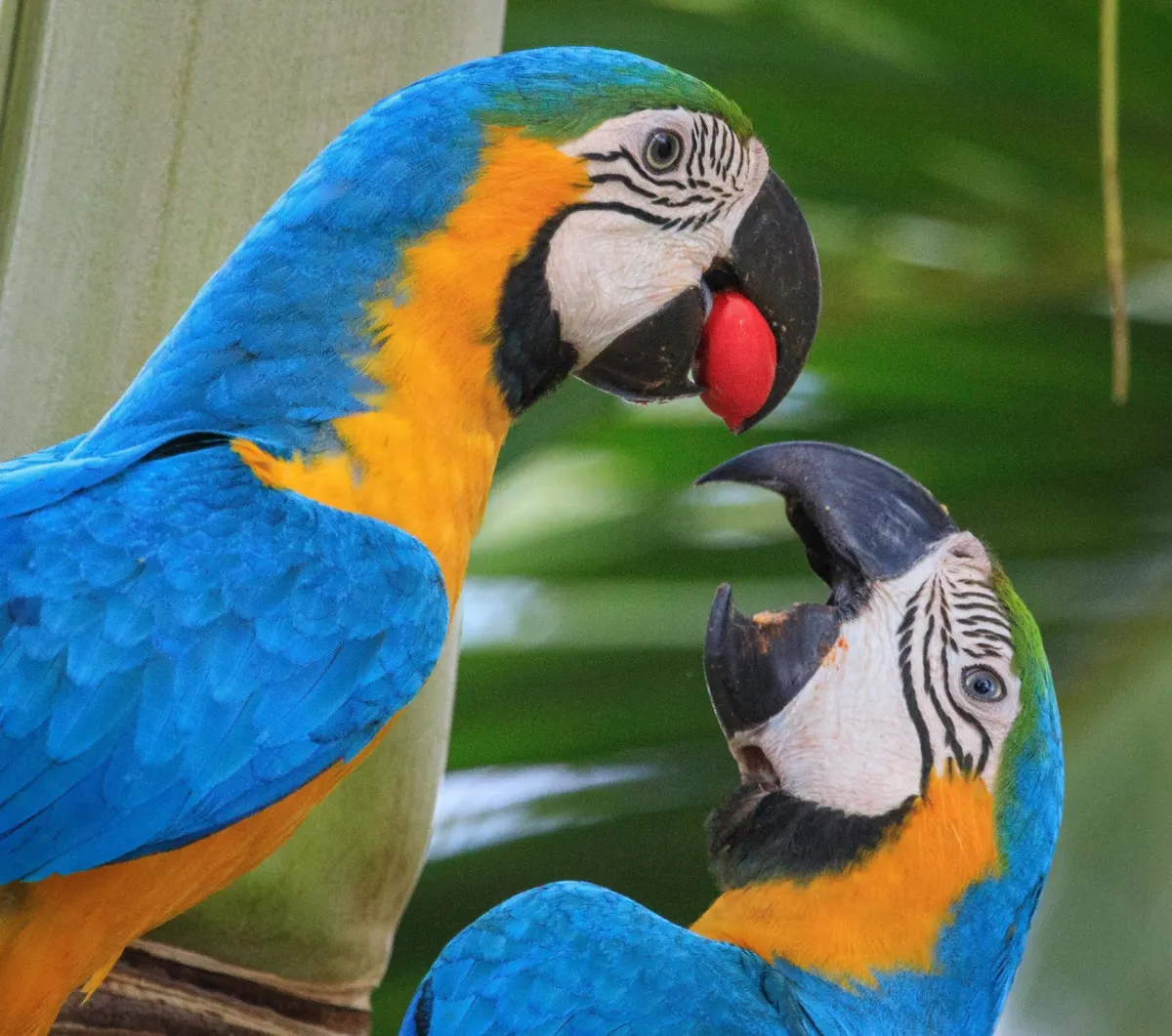
The Edwards’ Fig Parrot (P. edwardsii) – also known as Edwards’s Fig-parrot or Edwards’ Fig Parrot – is native to Indonesia and north-eastern New Guinea, specifically Humbolt Bay west to Irian and east to Huon Gulf.
Their natural habitat includes subtropical or tropical moist lowland forest areas and moist hill forests; occasionally they can be seen in partially cleared land.
This species was in the past thought to be a race of Salvadori’s Fig Parrot.
Description:
The Edward’s Fig Parrot averages 7 inches (~ 18 cm) in length. The most distinguishing features of the male fig parrots are the broad blue-black band on the upper breast, the red belly and lower breast and the broad black line through the eyes to the hind crown and nape. It has a green forehead.
The lores (the regions between the eyes and bill on the side of a bird’s head) and crown are yellowish-green cheeks. The side of the head is yellow. It has greenish blue patches under the eyes. There is a narrow violet-pale blue band on the breast progressing to the red band.
Females lack the red on the breast.
Immature males start to show their typical male colouration at about ten months at the earliest.
Edward’s Fig Parrots in Aviculture or as Pets:
Pet Qualities:
Rarely found in the pet trade, aviculturists insist that hand-raised parrots make excellent pets. They are vivacious, gregarious, very active and playful birds that tame easily. Their fascinating behavior patterns, coupled with their very bright and colorful plumage, make these little gems very attractive birds to own, both as pets as well as aviary occupants.
Breeding:
Breeding is regularly achieved. They do best in a spacious aviary / flight and their dietary requirements and the messy feeding habits they share with other fruit-eating birds necessitates strict hygiene to avoid a contaminated environment and resulting disease.
Fig-parrots generally breed prolifically and make good parents. Breeders can leave the chicks with the parents even after they have gone back to nest and older chicks will often assist in the rearing of future clutches.
- Housing requirements and captive breeding, as well as pet potential of fig parrots.
- The Diet of Fig Parrots plays a crucial part in ensuring good health and breeding successes of these birds.
Taxonomy:
Genus: Scientific: Psittaculirostris … English: Fig-Parrot … Dutch: Wigstaartdwergpapegaaien … German: Keilschwanzzwergpapageien … French: Lorillet
Species: Scientific: Psittaculirostris edwardsii … English: Edward’s Fig-Parrot … Dutch: Edwards Vijgpapegaai … German: Edwards Schmuckohrpapagei, Edwards Zwergpapagei … French: Lorillet d’Edwards … CITES II – Endangered Species
Keeping and Breeding Fig Parrots
Diet of / Feeding Your Fig Parrots
Photos of Different Fig Parrot Species for Identification
👆 Click the button above to get your FREE 5-day access right away
Filed under: Pet Birds, Parrots
Watch the free parrot training videos.
Short, force free lessons from Beak School on biting, screaming, and building trust with your bird. Enter your email and start watching.
Ready to start now? Claim Sale, $497
More on Pet Birds
8 Birds That Can Mimic Human Speech Almost Perfectly
Eight pet bird species that mimic human speech with stunning accuracy, and what their vocal learning means for training.
10 Best Birds For Experienced Bird Owners
If you’ve been a bird parent for years and feel ready to take on a feathered friend that matches your expertise, this article is for you. Today, we’re diving
Bird Feeder with Camera: Meet the Gigalumi Smart Bird Feeder
Imagine stepping outside and being greeted by an array of colorful birds, each chirping harmoniously, creating a serene backyard retreat.