Luzon Racquet-tail Parrots or Mountain Racket-tailed Parrots
Beauty of Birds Editorial Team
September 16, 2021 · Updated November 5, 2023 · 5 min read
The author of this article is separate from the Beak School training courses and their instructors.
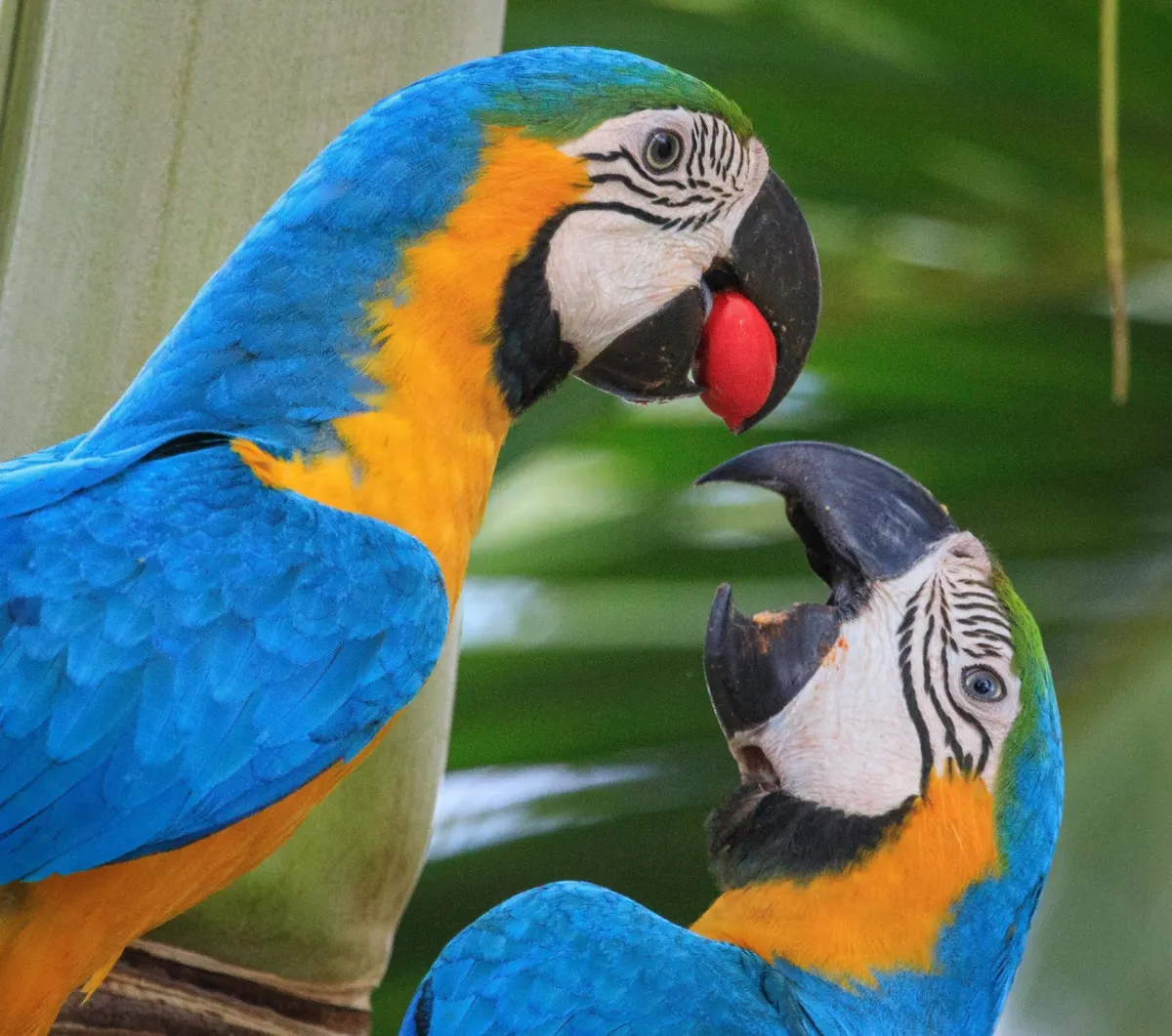
The Luzon Racquet-tail Parrots – aka Palette Momot, Lorito-momoto Montano or Mountain Racket-tailed Parrots – are native to the island of Luzon, Philippines. This bird species inhabits subtropical or tropical moist montanes.
Racket-tailed Parrots
Distribution / Status in the Wild:
The Luzon Racquet-tail Parrot – aka Palette Momot, Lorito-momoto Montano or Mountain Racket-tailed Parrot – is native to the island of Luzon, Philippines. This bird species inhabits subtropical or tropical moist montanes. The nominate as well as the sub-species are endangered in their natural habitat and not known in aviculture or in the pet trade (Cites II).
Sub-Species / Races Including Nominate:
- Luzon Racquet-tail, Palette Momot, or Lorito-momoto Montano (Prioniturus ontanus) – nominate form.
- Blue-winged Racquet-tail, Palette Des Sulu, or Lorito-momoto De Las Sulu (Prioniturus montanus verticalis: Endemic to the Philippines. Its natural habitats are subtropical or tropical moist lowland forests and mangrove forests.
- Mindanao Racquet-tail, Palette De Mindanao, or Lorito-momoto De Mindanao (Prioniturus montanus waterstradti): This parrot is endemic to the Philippines. This bird species inhabits subtropical or tropical moist montanes.
- Prioniturus montanus malindangensis
Description:
Average length is 12 ins (30 cm); wing length 6 – 6.75 ins (152 – 172 mm).
Males:
The general plumage is green. The throat, breast and abdomen are slightly more yellowish-green. The forehead, front of crown, lores (the regions between the eyes and bill on the side of a bird’s head) and foreparts of cheeks are dull blue with bases of all feathers green. They have a large red patch to the back of crown. In some birds, the back may have an olive-green tinge. The underside of the flight feathers and the tail are greenish-blue. The upperside is green with middle two feathers elongated with blackish-blue spatule-shaped end-ings. The outer tail-feathers are green with blackish tips. The bill is of a bluish-horn colour with whitish tips. The irises are dark brown and the feet bluish-grey.
Females:
Female completely green and on average shorter tail; forehead and eye area with strong blue tinge.
Immatures:
The immatures look like the females, but without the spatule-shaped endings. They attain their adult plumage after about two years.
Taxonomy:
Species: Scientific: Prioniturus montanus montanus … English: Mountain Racket-tailed Parrot … Dutch: Bergvlagstaartpapegaai … German: Gebirgs Spatelschwanzpapagei … French: Perroquet à raquettes tacheté d’montes Luzon
Sub-species:
Mindanao Racket-tailed Parrots aka Waterstradt’s Racket-tailed Parrots
Status in the Wild / Distribution: CITES II – Endangered … Distribution: Mounts Apo, Katanglad, McKinley on Mindanao in the Philippines. They can be found in mountain forest and open areas with remnant forest between 850 m (2,800 ft) and 2,300 m (7,700 ft); regularly visits rice paddies. They are only common in localities because of deforestation. They are .usually observed singly, in pairs or in small flocks flying high or foraging in trees. They are noisy and conspicuous in flight. Excellently camouflaged in trees and difficult to detect. They often feed in groups with other birds, such as pigeons and other parrot species.
They are unknown in aviculture and the pet trade.
Description: The Mindanao Racket-tailed Parrot average 11 ins (28 cm) in length. This species looks very similar to the nominate form described above – the Mountain Racket-tailed Parrot – except that it is smaller and has some color differences, such as a blue tinge to forehead and a paler and fainter eye area. The lores (the regions between the eyes and bill on the side of a bird’s head) and cheeks are greenish-blue and they lack the red patch on the back of green crown. The back and rump have a brownish tinge and the bend of the wing is washed with blue.
Both males and females look alike.
They are active, but quiet in trees. In flight, their can be very noisy with a penetrating and shrill call..
Taxonomy: Species: Scientific: Prioniturus waterstradti aka Prioniturus discurus waterstradti / montanus waterstradti … English: Mindanao Racket-tailed Parrot … Dutch: Mindanao Vlagstaartpapegaai … German: Mindanao Spatelschwanzpapagei … French: Perroquet à raquettes tacheté d’montes Mindanao
Mount Malingdang Racket-tailed Parrots:
Status in the Wild / Distribution:
CITES II – Endangered … Distribution: Mt.Malingdang District on Mindanao in the Philippines
Description: The Mount Malingdang Racket-tailed Parrots looks similar to the nominate form described above – the Mountain Racket-tailed Parrot – except that its plumage is supposed to be paler.
Taxonomy:
Species: Scientific: Prioniturus montanus malindangensis aka Prioniturus discurus malindangensis … English: Mount Malingdang Racket-tailed Parrot … Dutch: Mount Malingdang Vlagstaartparkiet … German: Mount Malingdang Spatelschwanzpapagei … French: Perroquet à raquettes tacheté d’montes Malingdang
Sulu Racket-tailed Parrots: (Prioniturus m. verticalis)
Distribution: The Sulu Racket-tailed Parrots or Blue-winged Racket-tailed Parrots are native to the Sulu islands of Jolo, Bongao, Tawi Tawi and Sibutu, Philippines.
Description: They are 12.25 ins (30 – 31 cm) long, with a wing-length of 6.5 – 7.25 ins (163 – 185 mm). Green parrot with racquet-like tail extensions. Whitish-grey bill. Bright green head, with bright blue crown. Male has large red spot in centre of crown. Rest of body yellowish-green, darkest on wings, with bluish wash to inner and outer webs of all primaries (longest wing feathers). Outer tail feathers tipped black and tail spatules also blackish. Possibly confusable with Tanygnathus parrots, but smaller, proportionately longer-tailed (with racquets) and has pale (not red) bill.
Female as montanus, but without blue to head; on average slightly larger.
Species Research by Sibylle Johnson
Please Note: The articles or images on this page are the sole property of the authors or photographers. Please contact them directly with respect to any copyright or licensing questions. Thank you.
Leave a Comment Cancel reply
Comment
NameEmailWebsite
Save my name, email, and website in this browser for the next time I comment.
Δ
This site uses Akismet to reduce spam. Learn how your comment data is processed.
👆 Click the button above to get your FREE 5-day access right away
Filed under: Pet Birds, Parrots
Watch the free parrot training videos.
Short, force free lessons from Beak School on biting, screaming, and building trust with your bird. Enter your email and start watching.
Ready to start now? Claim Sale, $497
More on Pet Birds
8 Birds That Can Mimic Human Speech Almost Perfectly
Eight pet bird species that mimic human speech with stunning accuracy, and what their vocal learning means for training.
10 Best Birds For Experienced Bird Owners
If you’ve been a bird parent for years and feel ready to take on a feathered friend that matches your expertise, this article is for you. Today, we’re diving
Bird Feeder with Camera: Meet the Gigalumi Smart Bird Feeder
Imagine stepping outside and being greeted by an array of colorful birds, each chirping harmoniously, creating a serene backyard retreat.