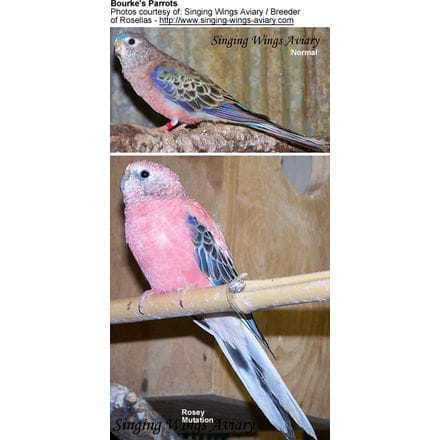
Bourke’s Parrots aka Bourke Parakeets, Rosey Bourkes
Bourke’s Parrots aka Bourke Parakeets (Neopsephotus Bourkii) are endangered in their own homeland of Southwestern and Central Australia, but are popular in aviculture.

 Gaurav Dhir
Bourke’s Parrots aka Bourke Parakeets (Neopsephotus Bourkii) are endangered in their own homeland of Southwestern and Central Australia, but are popular in aviculture.

The Green Conures (Aratinga holochlora), also known as Green Parakeets, are endemic to eastern and southern Mexico, from Nuevo Leon south to Veracruz, Oaxaca and Chiapas, and Central America south to northern Nicaragua.
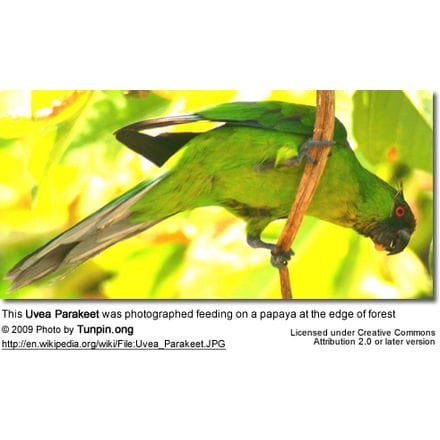
The Uvea Parakeets (Eunymphicus uvaeensis), also known as Ouvea Parakeets, was once considered conspecific (of, or belonging to, the same species) with the Horned Parakeet of Grande Terre, but they have now been split into two species.
Budgerigar / Budgie Breeders in the United States / Sorted by U.S. State Budgerigar, at Beauty of Birds you can get all the related information.
Provides Info on Breeding, Mutations, Genetics and Bird-specific Breeding Requirements / Procedures and Challenges, Mate Aggression; Unsuccessful Breeding (Infertility, dead-in-shells, etc.)

To know about the instructions for Candling Eggs to Assess Fertility and Embryo Development, visit Beauty of Birds you can get all the information related to Candling Eggs.
If you don’t find Lory / Lorikeet Breeders near you, contact the closest one to your location and ask for a referral to trusted, reputable breeder, or locate a bird club and ask for a lead.
If you don’t find anyone near you, contact the closest one to your location and ask for a referral to trusted, reputable breeder, or locate a bird club and ask for a lead. Bird Breeder by Species (sorted by bird species with breeders listed below each species) Florida: Jean (The African Queen) Pattison – New … Read more

The Malabar Parakeet (Psittacula columboides) – also known as the Blue-winged Parakeet – is native to India where it is still locally fairly common – though their numbers have decreased due to loss of habitat and trapping for the pet trade.
Newcastle Disease is caused by a virus. The first symptoms usually consist of respiratory distress and rasping followed in 1 or 2 days by paralysis of legs and wings and bad down between legs or straight back over shoulders.