Are Macaws Friendly? 8 Facts You Must Know
Beauty of Birds Editorial Team
September 9, 2023 · Updated November 5, 2023 · 7 min read
The author of this article is separate from the Beak School training courses and their instructors.
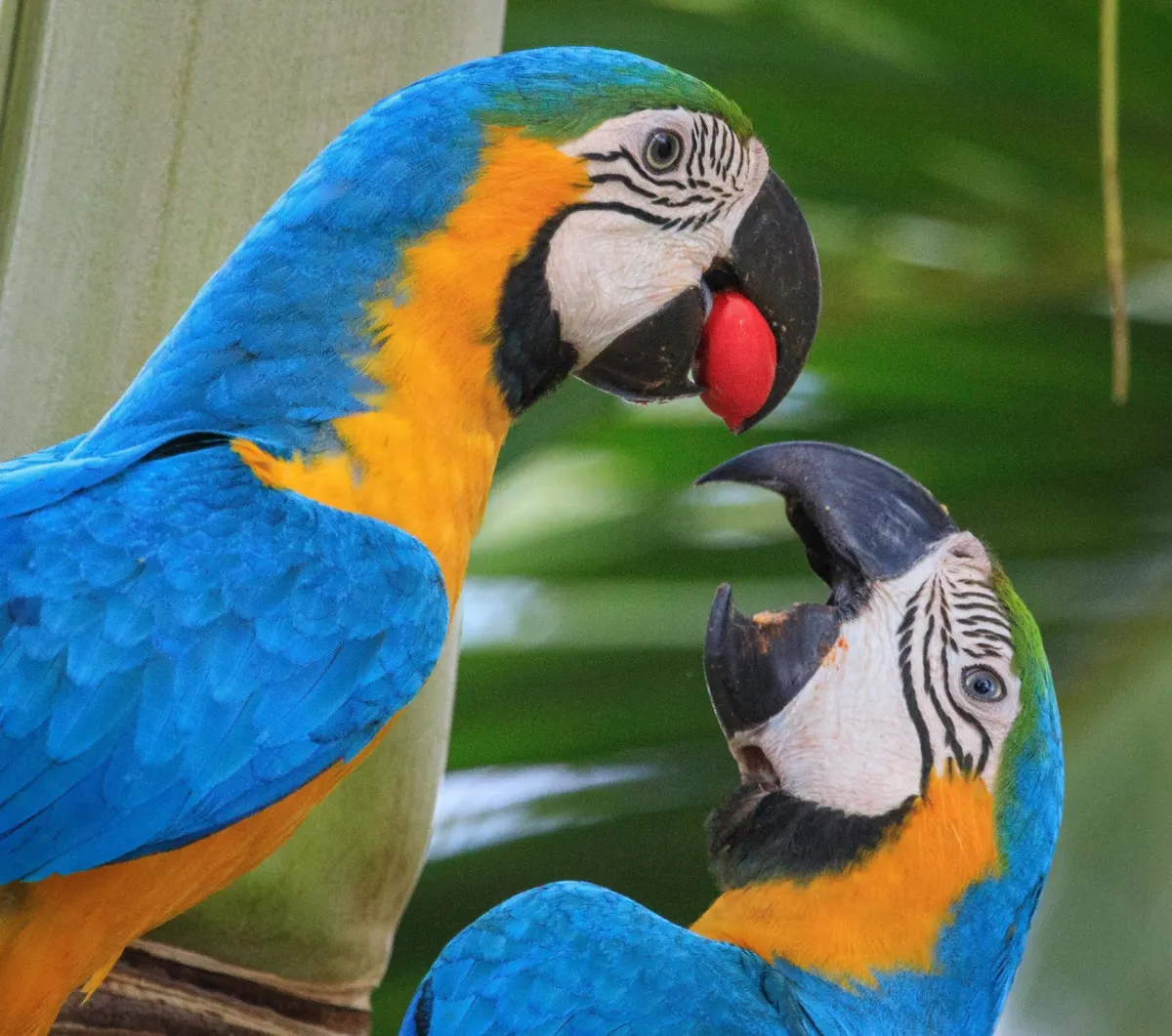
Loud and large, macaws may seem intimidating if you come across them, but these birds are in fact, known to be quite friendly and playful.
Are macaws friendly? Don’t let the sheer size and noisy nature of these birds fool you, macaws are actually very affectionate and require a lot of social interaction and undivided attention if kept as pets. Some of them may seem shy initially, but once they become familiar with you, they can be great companions.
Macaws are very intelligent birds and usually the only time they may get aggressive or unpleasant is when they are not receiving enough attention – therefore if you plan to keep a macaw as a pet, make sure you have enough time and energy to devote to them.
Need a trainer? Browse force free parrot trainers on Beak School.
1. Macaws need to bond with their owners
Macaws are charming birds that often possess a sense of humor. They could be all friendly and cuddly one minute, and then just to ruffle YOUR feathers, they could suddenly lunge at you, not to attack you but just to give you a little scare and create some amusement for themselves.
In order to keep their over friendliness and tricks in check, it is important for a macaw owner to set the rules immediately while making sure the new pet knows, it has your full attention and affection.
As they bond with their owner, macaws know how to draw a line between them and strangers.
Although usually known to be friendly around most people, certain levels of affection will only be displayed by a macaw to a person it loves and trusts, usually its owner or the family it spends most of its time with.
While macaws love to cuddle with their favorite person, it can become too much sometimes. We explain why here!
2. Macaws are extremely social
In the wild, macaws are barely ever seen alone. These birds, because of their friendly nature and fondness for creating tight bonds, are usually found in small family flocks.
If you are thinking of bringing one home as a pet, you will need to make sure you make the bird feel as if it is a part of your family and that it receives plenty of human interaction over the course of the day.
Failure to make a macaw feel included or loved will bring out the loud and unruly side of these giant parrots.
In case you have other pets at home, it is better for you to supervise your macaw initially around them. The macaw is known to be jealous and may not be too happy about sharing your attention with other pets.
Only when you are certain that the macaw has created a bond with the other pets and is friendly towards them, should you feel comfortable leaving them on their own. We explain more on that in this article: Do Cockatiels and Macaws get along?
3. Macaws thrive in structured and loving households
Because macaws are such intelligent birds, it is easy to set some ground rules with them. They understand how to get attention, even if it is negative and they know how to scream for it.
To decrease the typical macaw ear-shattering scream sessions, it is suggested that you create a routine that the bird can recognize and give it enough attention during that routine for it to remain happy, healthy and well-behaved, of course.
We show you how loud macaws can get and what you can do about it in this article!
4. Even the friendliest macaws can be destructive
Although they have a reputation of being loving and friendly, macaws are also destructive by nature. It is unlikely that they can be trained to get rid of their habit of chewing furniture, paper and other materials around the house, but it can be decreased by a significant amount.
The easiest and most effective way to do this is by ensuring that your pet macaw has plenty of play and exercise time during the day. A few hours out of the cage would help eliminate boredom and loneliness.
We also show you in this article what you can do to stop your parrot from chewing furniture!
5. If you want to have a friendly macaw you need to keep him/her busy
Since these are no ordinary birds, macaws, because of their size and activity level, require tall and large cages that allow plenty of room for them to move around.
The long tail feathers of the macaw dominate their need for a tall cage while the extra room allows them to swing and play around. This also means that having toys or suitable accessories in their cage is important as it helps keep them stimulated, active and most of all, entertained.
Soft and clean branches, along with wooden toys they can chew on are their favorite and can keep them busy for quite a while. If they don’t have toys or accessories to play around with, boredom can often entice them to throw about their food or other material from their cage.
They are also known to pluck off their feathers if they don’t have anything else to chew on, so that is yet another point to keep in mind when setting up their cage and establishing their eating schedule.
We have created a few articles to help you with finding the right toys for your parrots. Have a look at our articles below:
- Can parrots play with baby toys? What you need to know!
- Should you get a rope perch for your parrot?
- Why cuttlebones are crucial for parrots!
6. Macaws are as noisy as they are friendly
Macaws are definitely not recommended for people looking for quiet pets. Their size, bold colors and noise levels are the most distinctive part about them and they make sure to exhibit that clearly. These vocal birds love to sing and squawk and can even be trained to talk!
Trying to hush them is pointless as this is a part of their natural behavior and if discouraged, it is quite possible it could further increase.## 7. Macaws are friendly and loyal companions – but they are a commitment
Macaws can be loving and loyal companions in most senses, even in regard to their life span. When taken care of properly, certain types of macaws can live for an average of 60 years, with some even making it up to 80 years.
In order to ensure their well being, pet owners need to make a strong commitment to these pets and keep them feeling secure and loved with their attention and devotion.
When adopting one as a pet, make sure you are accepting them for all that they are – rowdy, playful and demanding.
You should also know that macaws are extremely messy. So their cage or room definitely requires daily cleaning. We show you 8 facts that show how messy they really are here!
8. Macaws are very fond of their food
When training a macaw, most pet owners report that food is a valuable tool that can be used as an incentive for good behavior. Since these birds are very fond of eating, food can be used as a reward to encourage them to stay unaggressive or destructive.
Macaws typically enjoy fruits, seeds, and nuts. Their diet tends to be higher in fat since they are such large birds. Their food needs to be carefully selected though as some vegetables or fruits can be very harmful to them as well.
They also require clean water to be available to them at all times.
Related Questions:
How many different kinds of macaws are there? There are 17 different breeds of macaws existing currently. Mostly originating in South and Central America as well as Mexico, each of these different breeds come with their own unique traits and needs.They are the largest parrots among the 370 different species of parrots on Earth.
How large can macaws grow? Macaws are large birds that can grow more than three feet tall, from beak to tail. The hyacinth macaw grows up to three and a half feet and has a wingspan that can go up to 60 inches. Due to their large size, a pet owner needs to make sure that their cage is suited to their height and weight.
Leave a Comment Cancel reply
Comment
NameEmailWebsite
Save my name, email, and website in this browser for the next time I comment.
Δ
This site uses Akismet to reduce spam. Learn how your comment data is processed.
👆 Click the button above to get your FREE 5-day access right away
Filed under: Behavior and Training, Bird Facts, Macaws
Watch the free parrot training videos.
Short, force free lessons from Beak School on biting, screaming, and building trust with your bird. Enter your email and start watching.
Ready to start now? Claim Sale, $497
More on Behavior and Training
Why Is My Parrot Biting Me? The Real Reasons (and the Fix)
Parrot biting is almost never aggression, it's communication you haven't decoded yet. Here are the real causes and the ethical way to stop it.
Training Your Dog and Cat to be Around Your Pet Birds – SAFELY!
I have always had cats – and for the better part of my life I have also had pet dogs and birds.
The Ultimate Cockatiel Poop Guide
Did you know that you can easily check your Cockatiels health? You can! Simply look at its droppings!