Common Diseases / Conditions of the Eclectus Parrot
Beauty of Birds Editorial Team
September 16, 2021 · Updated November 11, 2022 · 2 min read
The author of this article is separate from the Beak School training courses and their instructors.
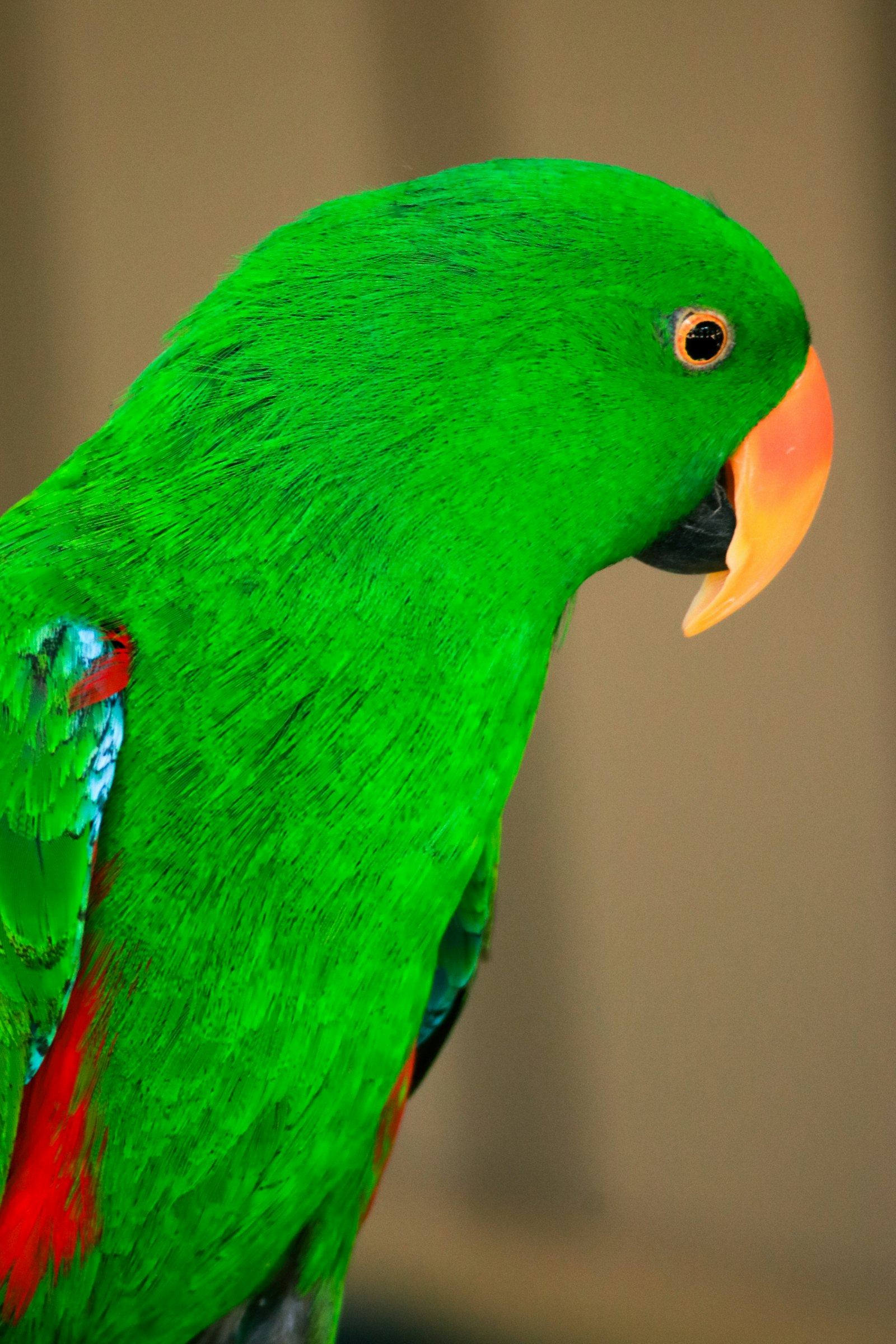
Photo: Ezekiel See / Unsplash
Common Diseases / Conditions of the Eclectus Parrot, a condition where the toes repetitively extend and contract – may occur alone or in combination with wing flipping or feather plucking.
Eclectus Information (Personality, Care, Diet)
Index of Bird Diseases … Symptoms and Potential Causes … Bird Health Care … Glossary of Avian Medical Terms … Medications Used in Avian and Exotic Medicine and Pharmaceutical Terms … How to administer oral medications to a bird
Respiratory Signs, Chronic Depression, Weightloss: Aspergillosis (fungal disease), bacterial infections / pneumonia, nutritional deficiencies (Hypovitaminosis A), inhaled toxins. … Sarcocystosis
Bad Feather / Beak Condition; Missing and Misshapen Feathers: Beak and Feather Disease (PBFD). A deadly, highly contagious (air-borne disease). Only supportive treatment available. No cure.
Annular Toe Deformities / Chick Deformities
Toe Tapping / Wing Flipping:
Description: A condition where the toes repetitively extend and contract – may occur alone or in combination with wing flipping or feather plucking.
Toe tapping could be caused by:
- Ingestions of foreign objects (i.e., toyparts, etc.).
- Fortified food items, such as bird treats, fortified seed mixes and even pasta also caused it. As soon as these foods were no longer fed, the toe-tapping stopped.
- Pellets: Most pellets contain harmful additives, such as artificial coloring / flavoring / preservatives, etc.
- Excess of dietary calcium or other nutrients
Liver Problems – due to nutritional deficiencies. Due to their longer digestive tract, eclectuses require fresh fruits and vegetables on a daily basis. If this need is ignored, health problems are commonly seen. One symptom of liver problems may be abnormal change in the color of the plumage. For example, feathers that should be green may turn red, or red feathers turn orange or yellow. Please refer to this webpage as an example.
They are susceptible to: Polyoma … Psittacine Beak and Feather Disease, PBFD, Beak and Feather … Sarcocystosis
Remember: All diseases associated with the listed symptoms are only SUGGESTED. There could be many other diseases causing those symptoms! Consult an avian vet.
NEED A VET?
USA: Find Your Local Avian Veterinarian
Information contained on this website is provided as general reference only. For application to specific circumstances, professional advice should be sought.
More Eclectus Information
- Eclectus Information (Personality, Care, Diet)
- Eclectus Species
- Eclectus Sub-species Identification
- Talking Ability (compared to other species)
- Common Diseases / Conditions of the Eclectus Parrot
- Eclectus Foods
- Purchasing an Eclectus Parrot
- Cages / Flights – Recommendations / Set Up Ideas
Filed under: Pet Birds, Eclectus Parrots
Watch the free parrot training videos.
Short, force free lessons from Beak School on biting, screaming, and building trust with your bird. Enter your email and start watching.
Ready to start now? Claim Sale, $497
More on Pet Birds
8 Birds That Can Mimic Human Speech Almost Perfectly
Eight pet bird species that mimic human speech with stunning accuracy, and what their vocal learning means for training.
10 Best Birds For Experienced Bird Owners
If you’ve been a bird parent for years and feel ready to take on a feathered friend that matches your expertise, this article is for you. Today, we’re diving
Bird Feeder with Camera: Meet the Gigalumi Smart Bird Feeder
Imagine stepping outside and being greeted by an array of colorful birds, each chirping harmoniously, creating a serene backyard retreat.